×
What's new

Junkie XL Brass?

the best would be the library jxl in kontakt format

I understand the request for Kontakt version of JXLBrass, especially at these early teething stages where stability is an issue. But the sine player shows way more potential at this point than kontakt, and shows loads of innovation.

The launch features are very promising. Mic Merging, downloading / deleting per mic / instrument, turning on and off dynamic ranges, round robin controls, sample attack/release control, extension of any instruments range, legato volume control. Remapping controls. Granted, some of these are in kontakt, but OT have a real game contender here for future composing.

Seeing what they are doing here, OT could also make an instrument merge feature, where you can merge and collapse the instruments, reducing the footprint overall too. You can't do that with kontakt, you would have to make a custom instrument, and then possibly code legato transitions too. People are having issues at this point, but it's early days. It's not even been two weeks yet.
 
give lot of money for having problems with something which could be optionnal is not the good way. It will be always good time, (later........) to switch with sine interface...
 
I also fell for the hype and bought JXL brass. After a night of playing with it, I am not sure what to think of it. My hopes were so high – I expected to open the instrument and be blown away by the sound. But to be honest, my first impression is disappointment, but I am sure that it is too early to tell this definitively.


As has often been mentioned, I too find the sound overprocessed, at times synth-like, even with the unprocessed mics. I will have to investigate further with different mic positions.


For the “unrivalled dynamic range”: I can not feel that. The only other dedicated brass library I have is Chris Hein Orchestral Brass (which I previously thought it might be OK but not as good as the other flagships, based on things I’ve read here), and to be honest: to me the Hein Brass has a bigger dynamic range. I later looked it up, and indeed it has 8 dynamic layers, as compared to the 5 of JXL, but it’s also apparent strictly by ear.


The same goes for the “unparalleled consistency” argument everyone was raving about. JXL indeed is extremely consistent, but not more so than the Hein, which furthermore has much more articulations.


On the solo instruments, I clearly prefer the tone and timbre of the Hein Brass. Sounds just more detailed, expressive, through the whole dynamic range, which is at least as big and in most cases actually bigger than JXL. Where the Hein falls apart for me personally is with the ensembles. Indeed there JXL sounds more “brassy” and better to me.


I am sure that a lot of this is just the “being used to” factor, and A/B-ing two libraries is not a good idea, something always gets spoiled. I am sure that if I only had JXL it would feel fantastic, and I will get used to it. It’s a great instrument, don’t get me wrong. But I really wonder whether it will suit me for more classical writing.


P.S: I by no means am affilitated or so with Hein, just thought to share my experience, because it was so surprising to me. As I did not have another “flagship” brass library, I obviously underestimated the Hein Orchestral Brass, thinking that JXL would be a whole different level, but it isn’t. Maybe it’s like in love: in order to really appreciate and value what one has, one has first to make a different experience :)
 
It’s a great instrument, don’t get me wrong. But I really wonder whether it will suit me for more classical writing.

As this is a JXL library, I didn't expect it to be suitable for classical writing. I was a keen listener of Toms film scores and from that I believed the library would be determined by that type of writing. I find it's interesting that people buy the library, and will try out classical, John Williams melodies, etc. It didn't happen for HZstrings, people weren't trying John Williams runs. At this point, I've only seen KEM try out a JXL track, or when Tom played Alita on it yesterday.

To me, this is a JXL library and that style of writing and sound is how it's purposed. Listening to Chris Hein ( I don't own it), I'd absolutely turn to that if I was thinking more 90's Alan Silvestri, which is a gorgeous sound too. You may have best of both worlds now. :)
 
  • Like
Reactions: nas
As this is a JXL library, I didn't expect it to be suitable for classical writing. I was a keen listener of Toms film scores and from that I believed the library would be determined by that type of writing. I find it's interesting that people buy the library, and will try out classical, John Williams melodies, etc. It didn't happen for HZstrings, people weren't trying John Williams runs. At this point, I've only seen KEM try out a JXL track, or when Tom played Alita on it yesterday.

To me, this is a JXL library and that style of writing and sound is how it's purposed. Listening to Chris Hein ( I don't own it), I'd absolutely turn to that if I was thinking more 90's Alan Silvestri, which is a gorgeous sound too. You may have best of both worlds now. :)

You are so right – it was a dumb / uninformed expectation of me. It is clear: want JXL sound, get JXL Brass, it’s clearly written on the box :)


But still I was so drawn into the hype in this thread and of the “from the softest to the loudest”, the “it’s the mother of all brass libs” talk etc. that I feel kind of brainwashed, but this is my own fault. I too like the JXL scores a lot, and also his previous electronic work – great stuff!

And I was also really just very astonished that no one ever mentioned the Hein Brass when discussing the "unparalleled consistency, dynamic layers" etc. of JXL Brass.

Your last sentence is consoling and very true, why not look at it from the positive side and having the best of both worlds :)
 
You are so right – it was a dumb / uninformed expectation of me. It is clear: want JXL sound, get JXL Brass, it’s clearly written on the box :)

But still I was so drawn into the hype in this thread and of the “from the softest to the loudest”, the “it’s the mother of all brass libs” talk etc. that I feel kind of brainwashed, but this is my own fault. I too like the JXL scores a lot, and also his previous electronic work – great stuff!

And I was also really just very astonished that no one ever mentioned the Hein Brass when discussing the "unparalleled consistency, dynamic layers" etc. of JXL Brass.

Your last sentence is consoling and very true, why not look at it from the positive side and having the best of both worlds :)

We've all been there, when our expectations driven by the hype can become so massive when it comes it's not as revolutionary it's bolstered to be. We've seen what happens when things are hyped way too much. It's a dangerous marketing game to play too, classing something as "Groundbreaking", "Revolutionary" or "Unparalleled" as we've seen before, then when it doesn't pan out, the backlash can be vicious. I do really like JXL brass, but it's because I love smacking people in the face with Jack Sparrow's Alita's dick.
 
Last edited:
You are so right – it was a dumb / uninformed expectation of me. It is clear: want JXL sound, get JXL Brass, it’s clearly written on the box :)


But still I was so drawn into the hype in this thread and of the “from the softest to the loudest”, the “it’s the mother of all brass libs” talk etc. that I feel kind of brainwashed, but this is my own fault. I too like the JXL scores a lot, and also his previous electronic work – great stuff!

And I was also really just very astonished that no one ever mentioned the Hein Brass when discussing the "unparalleled consistency, dynamic layers" etc. of JXL Brass.

Your last sentence is consoling and very true, why not look at it from the positive side and having the best of both worlds :)

When I first purchased this library, I too was concerned if I could create more "traditional" or more "old school" scores. While I agree that this library seems to live more comfortably in a JXL type of score, I have found it very usable and actually lovely sounding by using the unprocessed mics and especially turning off the top two dynamic layers. Then experimenting more with the different mic positions can yield some very nice results.

Perhaps the only thing is that the sections are on the larger side and a2 patches would work better for more classical scores rather than larger sections. I know one can use a solo horn patch and play chords etc.. but it doesn't quite sound the same as an a2 patch.

Other than that, I would say don't be too discouraged. Try and experiment with the ideas mentioned above and maybe your favorite reverb and you may find you get great results.
 
chris hein brass doesn't have nearly the same dynamic range. And using the intentionally processed hollywood hyped version of the microphone will get you that sound


imagine I open CH orchestral bass and am surprised I dont have the 40+ piece hyped inception brass sound lol. If CH has 8 dynamic layers it doesn't sound like it - its recorded practically in an anechoic setup, and is possibly one or the worst apples to oranges you can get with comparing brass libraries lol

I just think it's an irresponsible purchase followed by an irresponsible "first impression".

I'm not planning on talking bad about CH brass, I'll just say its radically different- and if someone just bought it with 0 information and then complained that it wasnt what they wanted it to be, and made no effort to figure out what it was before complaining about it, you'd think that would be silly right?
 
Last edited:
As this is a JXL library, I didn't expect it to be suitable for classical writing. I was a keen listener of Toms film scores and from that I believed the library would be determined by that type of writing. I find it's interesting that people buy the library, and will try out classical, John Williams melodies, etc. It didn't happen for HZstrings, people weren't trying John Williams runs. At this point, I've only seen KEM try out a JXL track, or when Tom played Alita on it yesterday.
Williams' style is defined primarily by composition and orchestration. I see no reason why you could not get a Williams-like sound from JXL brass. Just don't use the fffffffff layers and avoid the biggest sections.
 
Williams' style is defined primarily by composition and orchestration. I see no reason why you could not get a Williams-like sound from JXL brass. Just don't use the fffffffff layers and avoid the biggest sections.
yes, composition and orchestration with intricate part writing. This is really not the library for John Williams sound. As much as Tom wanted to push that sentiment. But kinda obvious when you look at the instruments sample.
 
yes, composition and orchestration with intricate part writing. This is really not the library for John Williams sound. As much as Tom wanted to push that sentiment. But kinda obvious when you look at the instruments sample.
There is no actual 'library for John Williams' sound', they are all samples with different degrees of flexibility. It would be false to say that JW avoids using a fairly large brass section (some scores have 6 horns, 4 bones, 4 trumpets) and does small intricate brass writing only, if that is the point you're trying to make. Sure, it would be nice to have a2 patches too, but do you seriously believe that a3 is going to sound so widely different from using a2 to play polyphonic? In the end Williams sounds like Williams because of his typical style and writing, not because there's an additional trumpet of trombone playing in a mix done with samples.
 
As a listener of film music I'm not at all a Junkie XL fanboy, and as a composer I'm much more into traditional symphonic writing, so I was very reluctant to buy the JXL Brass. However, from my experience with other OT libraries I gave it a shot and I have to say, it's more playable than, say, VSL and Spitfire. I'm going with the small sections (3 Tb, 3 Tp, 4 Hrns...) and the solo instruments, and it sounds beautiful and even tender if used with the right mic setting (mainly tree). Maybe there's other brass libraries out there that do the soft parts better, but as of now I feel that JXLBrass is a pretty usable, versatile tool.
 
chris hein brass doesn't have nearly the same dynamic range. And using the intentionally processed hollywood hyped version of the microphone will get you that sound


imagine I open CH orchestral bass and am surprised I dont have the 40+ piece hyped inception brass sound lol. If CH has 8 dynamic layers it doesn't sound like it - its recorded practically in an anechoic setup, and is possibly one or the worst apples to oranges you can get with comparing brass libraries lol

I just think it's an irresponsible purchase followed by an irresponsible "first impression".

I'm not planning on talking bad about CH brass, I'll just say its radically different- and if someone just bought it with 0 information and then complained that it wasnt what they wanted it to be, and made no effort to figure out what it was before complaining about it, you'd think that would be silly right?

Of course it is an apple vs orange comparison – I mentioned the point about my “irresponsible expectations” above clearly. My mistake. Neither did I want to talk bad about JXL. It’s just that, as Niels and several other mentioned, there was a strong push that JXL brass would also cover the more classical or “traditional side”, which in my opinion it may well do, but not to the degree I expected after reading e.g. this thread. The same concerning the dynamic range. I was not complaining, just sharing my “0 informed” and “silly” experience. Be gentle, I’m new in this game and have to learn by trial and error :)


It’s comments like “Chris hein brass doesn’t have nearly the same dynamic range” that can give uninformed newbies like me really a wrong impression of the instrument.


I do not have the time or intent to argue, hope all of you will enjoy your new inception brass, I will too :)
 
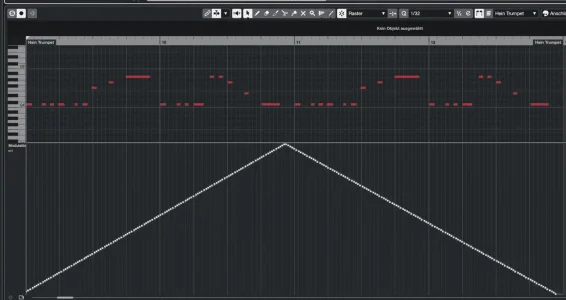
Just a very short comparison regarding the dynamic range. Nothing musical, just the same midi snippets, mapped dynamics in both JXL and CH Brass to CC11 and draw a straight line to go through all of the dynamic layers. Close mic on JXL (I know this does not do it justice, but to compare it to the bone dry CH Brass it seems the most suited to me). No verb on both. Trumpet shorts on CH, marcato short in JXL, in a crude attempt to land the length of the notes in the same ballpark for the sake of the comparison.Tubas longs.

Sound and timbre are a matter of opinion. I like the JXL tuba, but man this trumpet is not my cup of tea.


1577618942600.png
 

Attachments

Williams' style is defined primarily by composition and orchestration. I see no reason why you could not get a Williams-like sound from JXL brass. Just don't use the fffffffff layers and avoid the biggest sections.

It is, and with such you need the right library to be able to manage the composition. My point was, rarely anyone looking for that classical or John Williams sound would see this and think 'yup - jxlbrass is the one for me'. There's more to Williams than just not using dynamic layers. For instance, no mutes.

In addition, I'm extremely pleased by my purchase and excited by JXL Brass. So I'm not dissing the library. Quite the opposite, JXLbrass knows what it is, and does it exceptionally well!
 
There is no actual 'library for John Williams' sound', they are all samples with different degrees of flexibility. It would be false to say that JW avoids using a fairly large brass section (some scores have 6 horns, 4 bones, 4 trumpets) and does small intricate brass writing only, if that is the point you're trying to make. Sure, it would be nice to have a2 patches too, but do you seriously believe that a3 is going to sound so widely different from using a2 to play polyphonic? In the end Williams sounds like Williams because of his typical style and writing, not because there's an additional trumpet of trombone playing in a mix done with samples.
Berlin Brass... anyway, my point is that JW uses instruments not like fixed ensembles, but as individuals. Nothing to do with the section sizes, but how he uses these sections.
And yes I seriously believe that the a3 patch is not suitable for polyphonic trumpet writing (don’t know why you are a little aggressive on that one). There are tricks to get around that, but the still sound very hyped and gigantic. Which I actually like.

My way around that in my demo for JXLB was to use the tp a3 patch for the top line and the solo trumpets for supporting the missing 2 notes of the triad below.
 
The second example doesn't even make sense, no idea what articulation you are using , it doesn't even sound like you are moving the mod wheel

I'm not sure if your concern troll or what oh, but you would have to intentionally Miss program that part entirely in order to come up with that result
 
Back
Top Bottom